


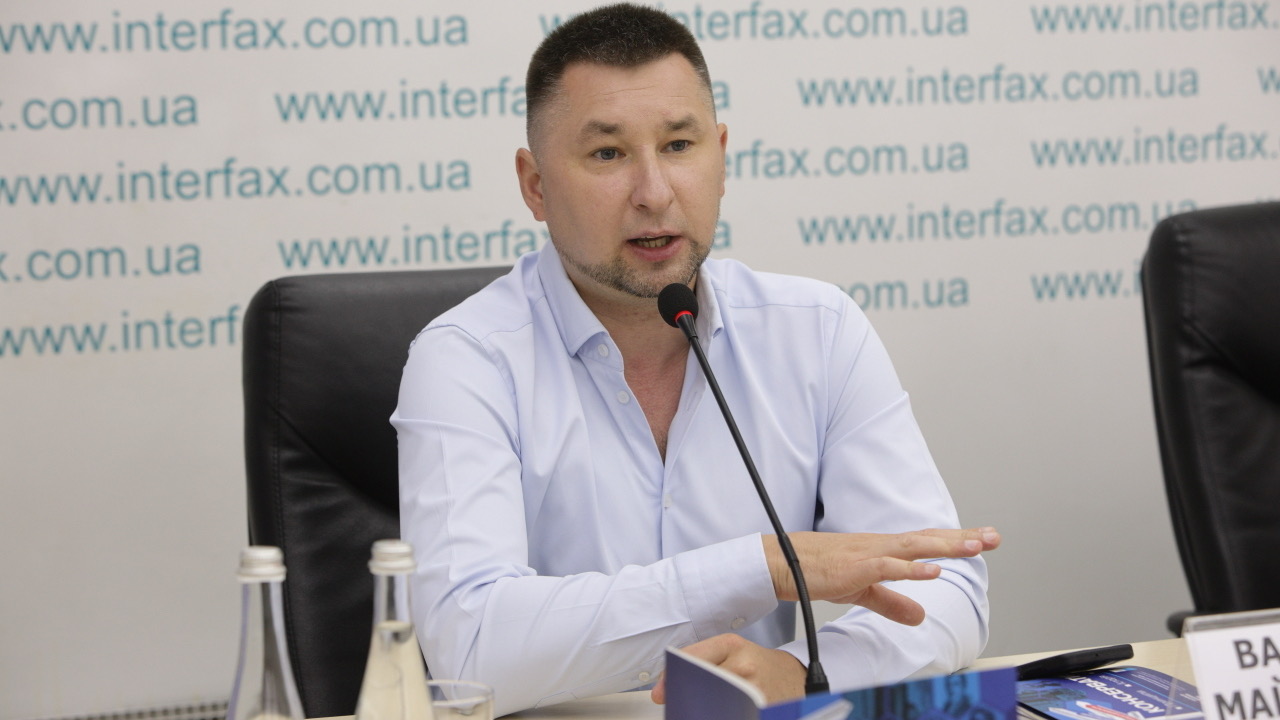
The Ukrainian-Polish dispute over historical memory has long since gone beyond a discussion of individual figures. This was stated by political scientist Valerii Maidanuk during an expert discussion titled “The Right to One’s Own Memory: National Identity, Dialogue with Neighbors, and the Russian Factor,” organized by the Ukrainian Security Club and the NGO “Foundation for the Promotion of Democracy.”
What’s at stake
According to Maidanuk, the crisis is not limited to the Lviv Regional Council’s decision to honor Roman Shukhevych and the UPA, nor to the reaction of Polish politicians. The outcome of the dispute—whether positive or negative for Ukraine—will depend on who is deemed to be at fault in the scandal. But the main question is another: who has the right to determine how Ukrainians should remember their own history?
Why History Is Being Used as a Tool of Pressure
A political scientist identifies several reasons why the historical issue is becoming increasingly contentious:
— internal political struggles and the battle for voters;
— pressure on Ukraine regarding other issues, particularly European integration and economic competition;
— Russian aggression, against the backdrop of which any discord between Kyiv and Warsaw plays into Moscow’s hands.
Poland is both a key partner of Ukraine and one of the countries threatened by Russian expansion. Therefore, according to the expert, turning historical disputes into a permanent confrontation could have consequences more serious than just another diplomatic scandal.
“Russia is interested in ensuring that Ukrainians and Poles view one another, first and foremost, as historical adversaries,” Maidanuk noted.
Reconciliation without unilateral concessions
According to the political scientist, acknowledging the complex and tragic chapters of our shared history is necessary for mutual understanding, but it should not become a means of exerting pressure. The pursuit of reconciliation does not mean that Ukraine must be the first to make concessions: respect for Polish memory must go hand in hand with respect for Ukrainian history and symbols.
Complex issues cannot be resolved by calling on people to forget their grievances. What is needed is dialogue, a willingness to examine the past, and mutual respect—not the exploitation of historical traumas for political blackmail.
Sovereignty and Memory
Maidanuk views the right to one’s own historical memory as an integral part of sovereignty. A state that is unable to come to terms with its past on its own risks having its symbols and interpretations become the subject of external bargaining.
A Strategic Mistake
Maidanuk warned that if historical conflicts begin to shape contemporary relations between Kyiv and Warsaw, it would be a strategic mistake, the consequences of which the Kremlin would exploit. Issues of security, defense, and economic cooperation must remain a priority.
The political scientist emphasized that the goal of Ukraine’s position is not to create new narratives, but to ensure society’s right to independently define its values, honor its heroes and victims, and develop partnerships with its neighbors on the basis of equality.