


Kyiv, November 2026
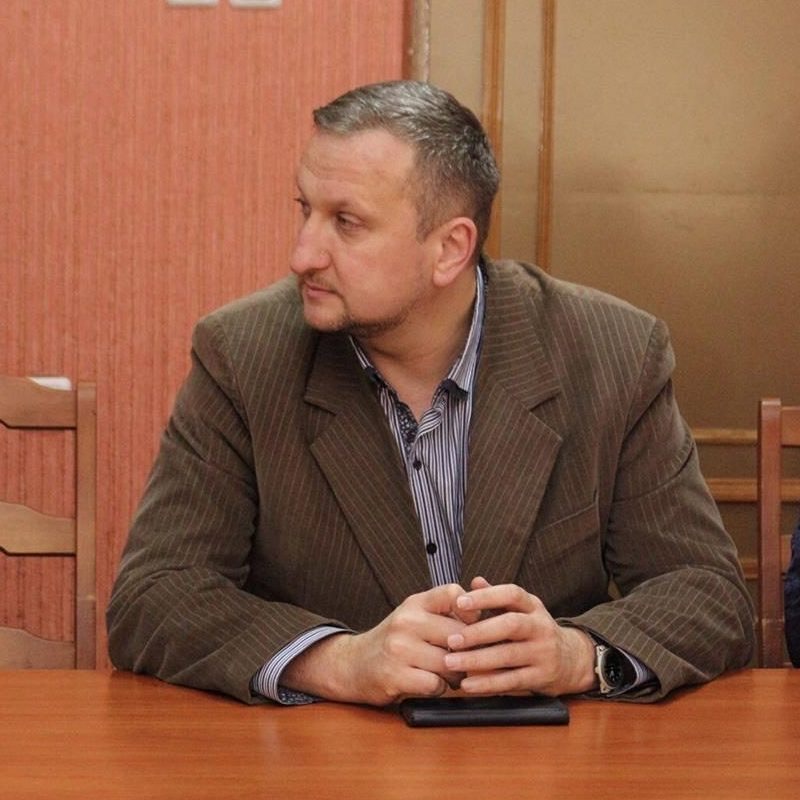
Language, historical memory and national self-identification are not only questions of culture but also a line of the state’s defence. This was stated by Yurii Mindiuk, head of the Ukrainian Security Club and a serving soldier, at the UBC session “A Cohesive Nation” held in Kyiv on 5 November.
In his words, since 2022 Ukraine has undergone a serious evolution in how it sees itself, but a cohesive nation has not yet been formed.
“Since 2022 Ukraine has gone through a very serious evolution in its perception of itself, its understanding of its own selfhood and its own national existence. In essence, we have begun to crystallise as a Ukrainian nation,” Mindiuk said.
As examples of unfinished nation-building he cited Odesa and Kharkiv, where, he said, support for a union with Russia was noticeable even at the start of the massive shelling in 2023.
“Sociological surveys were carried out: in Odesa in 2023, 18% were in favour of a union with Russia. In Kharkiv, 15%. And that was in 2023, at the start of the massive bombardment of these cities. Where is our completed nation-building here? Where is the presence of national identity?” he asked.
Mindiuk called language and national identity the boundary of the country’s defence project.
“I put the question as a soldier would: in essence, language and national identity are a line of defence. They are the boundaries of our defence project. If this is missing, if there is no understanding that we are fighting for our language and our own history, our national project will remain unfinished,” the speaker stressed.
The threats he sees
Among the main challenges, Mindiuk singled out:
• the return of pro-Russian attitudes into everyday life — children speaking Russian, watching Russian TV series and listening to Russian rap;
• new talk of Russian as a second state language, around which, he said, a political milieu is already forming;
• localism and regionalism, which in his view can weaken national unity;
• Hungarian and Polish imperialisms, which, according to the speaker, are beginning to influence Ukrainian consciousness and culture.
“Little by little, a ‘renaissance of Russianness’ is happening again. We can see it in Kyiv at the everyday level: children speak Russian, watch Russian TV series, listen to ‘Russian rap’ and so on. As I understand it, this is not only in Kyiv. These are trends that need to be monitored, worked on and fought,” Mindiuk said.
He also named Ukrainian individualism and an incompletely formed common national project as an internal challenge. This, he said, is exactly what Russia was counting on.
“Identity is an element of national security. It is the weapon that holds the front. And this must be said at every level, without fail. Language, national culture, historical memory — all of it must be included in this catalogue,” he stressed.
Victory in the war, Mindiuk concluded, cannot be measured only in kilometres of front line gained.
“We should realise that victory in the war is measured not only in kilometres of front line gained, but also in the resilience of our cohesive ‘we’,” he said.
The session was organised by the Ukrainian Security Club and the NGO Foundation for Democracy Assistance with the support of the Hanns Seidel Foundation Office in Ukraine.