


On 20 November, Anthropic mathematician Levent Alpöge announced that, working with the company’s AI model Claude, he has found a proof of the Riemann hypothesis – the most famous unsolved problem in mathematics, first posed in 1859. The proof has not been released as a paper but as a vast archive of code in Lean, a language in which a computer checks every step. It has passed its first independent checks, yet mathematicians stress that the problem will not be considered solved for some time.
Alpöge posted a four-page note on his website, alpo.ge, reports Scientific American. He says the same method also proves the Generalized Riemann Hypothesis for Dirichlet L-functions – a broader statement on which hundreds of results in number theory depend.
‘I believe I have, working with Claude, discovered a proof of the Riemann Hypothesis,’ the note begins.
41 days and 239 megabytes of code
According to Alpöge, the timeline of the work was compiled by Claude itself after searching their joint material. It covers 41 days, from 6 October to 16 November 2026. Alpöge says he set the direction and brought together tools from different areas of number theory, while Claude did most of the heavy technical derivation and, by the final stage, was moving faster than he was, ZME Science reports.
‘Claude flew, and danced, and sparkled near that finish line,’ Alpöge writes of the final weeks.
The proof comes as a 14-part archive containing 175,187 files and roughly 17.4 million lines of Lean – 239 MB in total. A machine-generated prose version reportedly runs to more than 250,000 pages, so Alpöge chose to release only the Lean code rather than a text no human could read, and has promised to simplify and explain the argument himself.
For Alpöge, it is also a personal moment: he says he wanted to tackle the hypothesis since his student days and now loses ‘a principal guiding light’ of his research. At the same time, he calls what he has seen the dawn of ‘something far greater’ across science.
What the Riemann hypothesis says
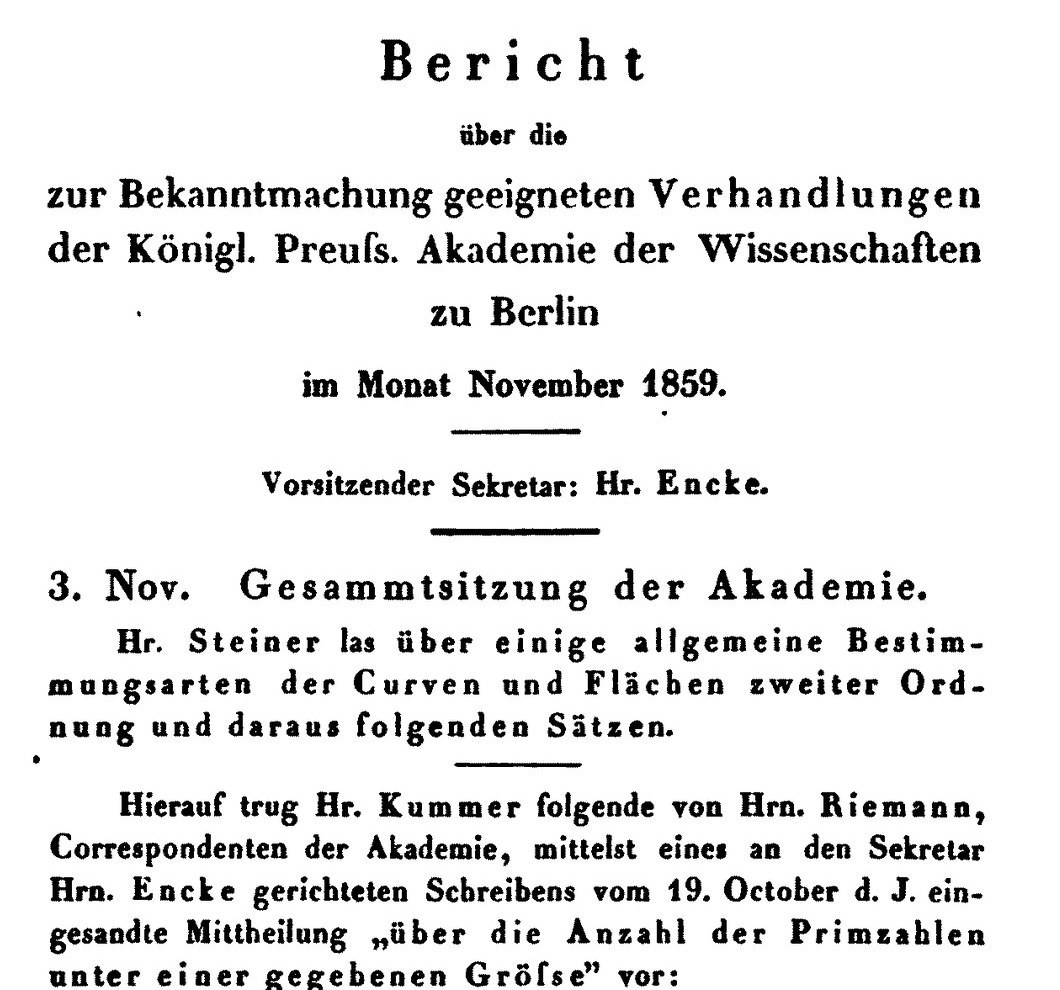
In November 1859 the German mathematician Bernhard Riemann sent the Prussian Academy of Sciences a paper titled ‘On the Number of Primes Less Than a Given Magnitude’. Prime numbers – 2, 3, 5, 7, 11, 13 and so on – can be divided only by 1 and themselves. They look randomly scattered, but Riemann showed that their distribution is encoded in a single function: the zeta function ζ(s). A fuller introduction is available on Wikipedia.
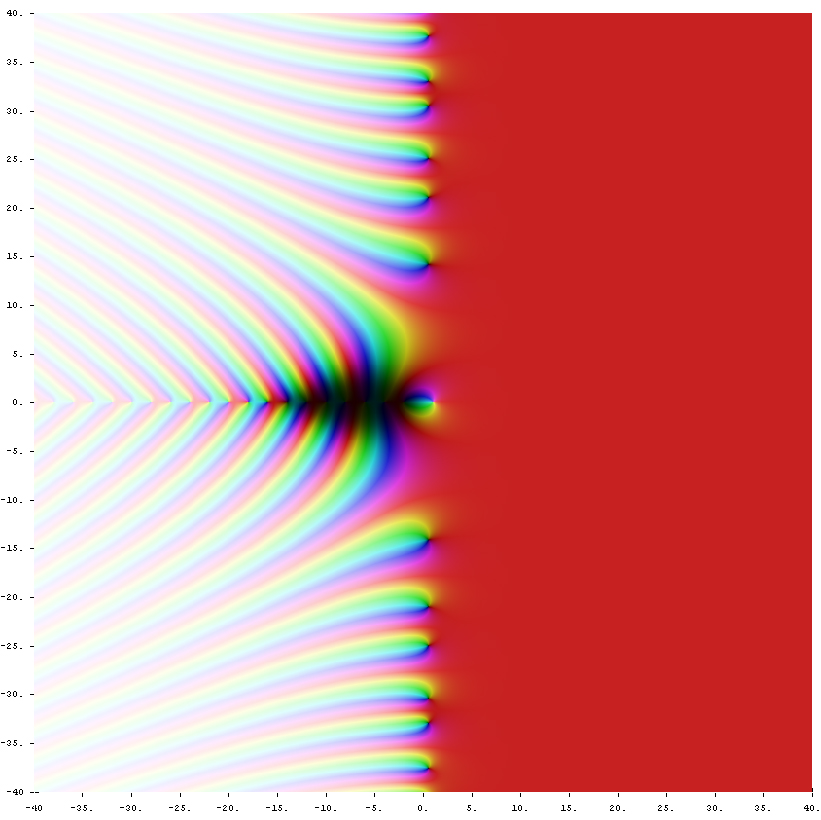
For real s greater than 1, the zeta function is the simple sum ζ(s) = 1 + 1/2s + 1/3s + 1/4s + …, and Leonhard Euler had already noticed that the same value is given by a product over all primes. Riemann extended the function to the whole complex plane – numbers of the form s = a + bi – and focused on the points where it equals zero.
There are two kinds of zeros. The ‘trivial’ ones sit predictably at the negative even numbers: −2, −4, −6 and so on. The rest, the ‘non-trivial’ zeros, of which there are infinitely many, lie in a narrow vertical strip between the lines Re(s) = 0 and Re(s) = 1. The Riemann hypothesis states that all of them lie exactly in the middle – on the ‘critical line’ Re(s) = 1/2.

These zeros govern the ‘noise’ in how the primes are distributed. If the hypothesis holds, the number of primes up to any x deviates from its average estimate by no more than roughly √x·ln x, and gaps between consecutive primes cannot grow too large. In practice the gaps are very uneven: some are 2, some 4, and in 2017 Martin Raab found a gap of 6,582,144 between two probable primes with 216,841 digits each, with every number in between composite.
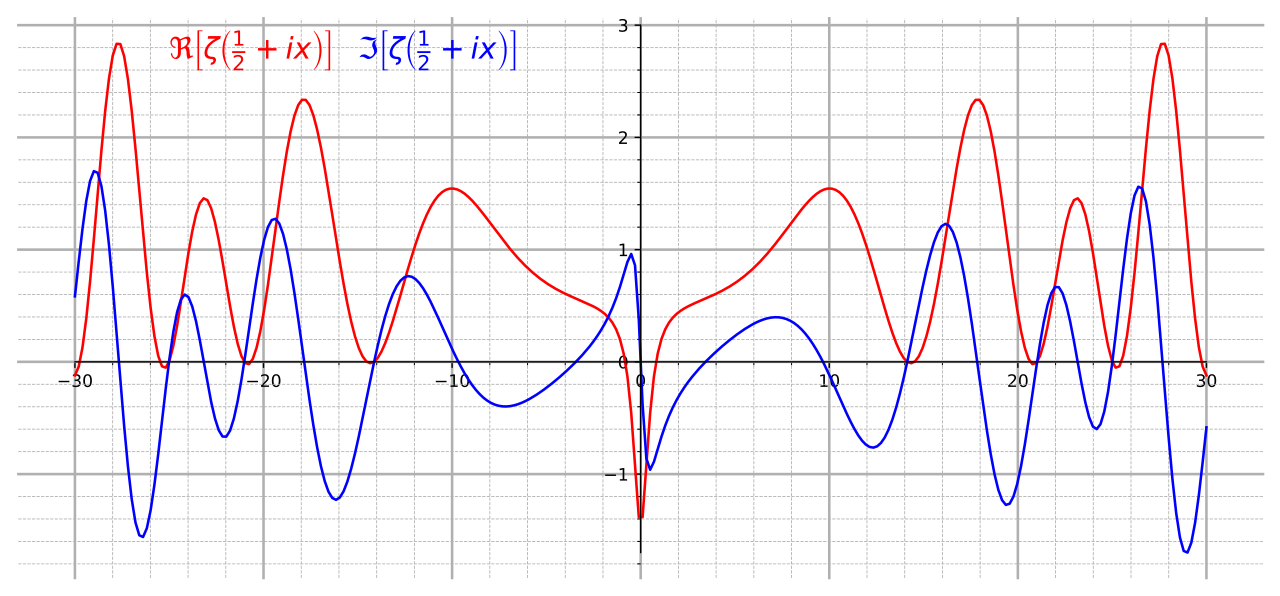

The hypothesis cannot be settled by brute force. Computers have confirmed that more than 12 trillion of the first non-trivial zeros lie on the critical line (a rigorous check by Dave Platt and Tim Trudgian up to height 3·1012), but there are infinitely many zeros, and a single exception would disprove it. That is why David Hilbert put it on his 1900 list of the century’s great problems, and why in 2000 the Clay Mathematics Institute made it one of seven Millennium Prize Problems, each worth $1 million.
The hypothesis also has an unexpected relative in physics. In the early 1970s mathematician Hugh Montgomery and physicist Freeman Dyson noticed that the spacing between zeta zeros follows the same statistics as energy levels in heavy atomic nuclei and in models of quantum chaos. Why pure abstraction mirrors the physical world so closely is still unexplained.
Who is checking the proof, and how
Lean checks each logical step mechanically, but a successful build answers only part of the question. Experts need to confirm that the code does not rely on hidden assumptions (extra axioms) and that the formal statement really is the Riemann hypothesis rather than something that merely looks like it, lean4.dev explains.
The first results came the same day. MIT mathematician Andrew Sutherland compiled the archive independently: according to Kingy AI, all 175,187 modules passed Lean’s kernel check, and the headline theorems rely only on the standard axioms. Sutherland called it a ‘historic moment’ while stressing that much work remains on the mathematical details. Mathematician Elliot Glazer wrote that the formalised statement is indeed the Generalized Riemann Hypothesis.
The irony is that Sutherland is the author of a line, given to Scientific American back in 2024, that everyone is now quoting:
‘An AI that can prove the Riemann hypothesis is not one I’d want to meet. If that happens, mathematicians having jobs will be the least of our problems.’
Andrew Sutherland, MIT
Others are more guarded. ‘Let’s see if it compiles first,’ said Kevin Buzzard of Imperial College London. Fields medallist Terence Tao wrote on his blog that the Lean community’s Zulip thread is probably the best place to follow the verification effort. ‘It is both a wonderful time and a terrible time to be a research mathematician,’ said James McKee of Royal Holloway, University of London.
Even if everything checks out, the prize will not come quickly: Clay’s rules require publication, at least two years of scrutiny and general acceptance by the community. For now, the hypothesis officially remains open.
The year AI took on the Millennium Problems
Alpöge’s claim caps a year of striking AI results in mathematics. In August, Anthropic reported that a research version of Claude, asked to ‘take a real stab’ at the Riemann hypothesis, had not proved it but had raised the proven share of zeros on the critical line from 41.6% to 67.2%. That result was checked by Alpöge and Ralph Furman.
On 8 September OpenAI announced a solution to another Millennium Problem, on the Navier–Stokes equations of fluid flow, produced by roughly 10,000 AI agents working in parallel over 88 hours. The company says it started after hearing rumours later linked to Alpöge and mathematician Tristan Buckmaster, and credit for that work is still disputed. In October OpenAI released hundreds of new results, including a proof of the ‘quasi-Riemann hypothesis’, a weaker version of the problem.
Alpöge describes a different model: the human set the strategy, and the AI sped up and finished the technical work. Whether that becomes a template for science will depend on whether people can understand the proof, not just confirm that it is correct.
Does this threaten encryption?
On social media the news is already being tied to the end of cryptography: RSA’s security rests on how hard it is to factor large numbers into primes, and the Riemann hypothesis is about primes too. But there is no direct link. A proof of the hypothesis gives no fast way to find factors – it confirms what mathematicians already believed and have long assumed in many calculations. Mathematician Alon Amit dismissed the popular claim that such a proof would endanger internet security as ‘sheer nonsense’ back in 2021.
Cryptocurrencies are not at risk either: Bitcoin signatures use an elliptic curve over a prime field, and their strength does not depend on the Riemann hypothesis. The real challenge to RSA and today’s digital signatures is quantum computing, which is why the world is already moving to post-quantum algorithms.
In the coming weeks the Lean community will continue checking the code, while mathematicians try to grasp the idea behind it. Alpöge describes his method as a descendant of Stepanov’s method, with the required multiplicity supplied by a chain of theta lifts between unitary groups. If the proof survives scrutiny, the most famous problem in mathematics will have been solved for the first time by a human working in tandem with artificial intelligence.
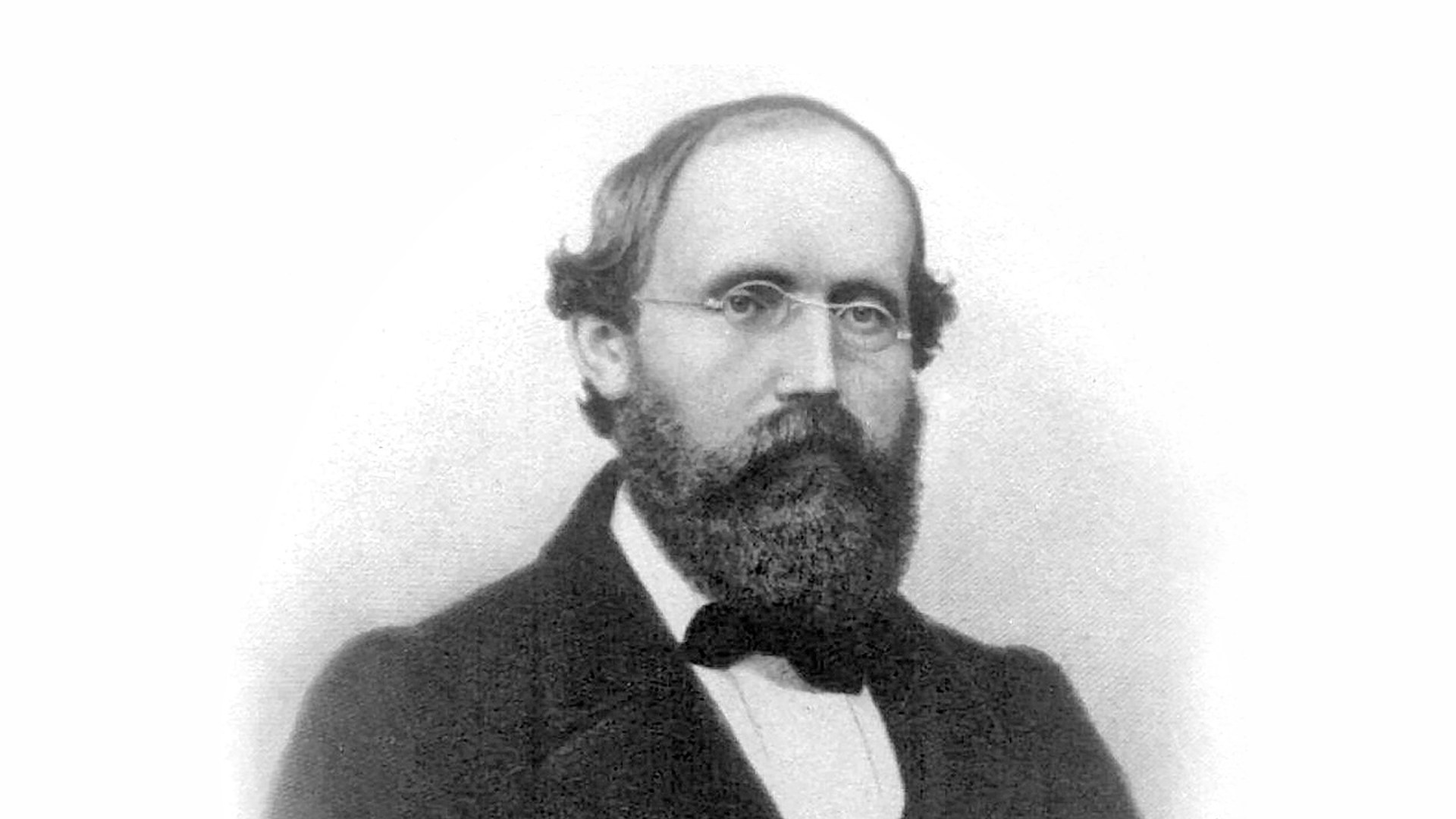
Main image: portrait of Bernhard Riemann, 1863, Wikimedia Commons, public domain. Illustrations: Riemann’s 1859 paper, Jan Homann, Slonzor – Wikimedia Commons, public domain.
