


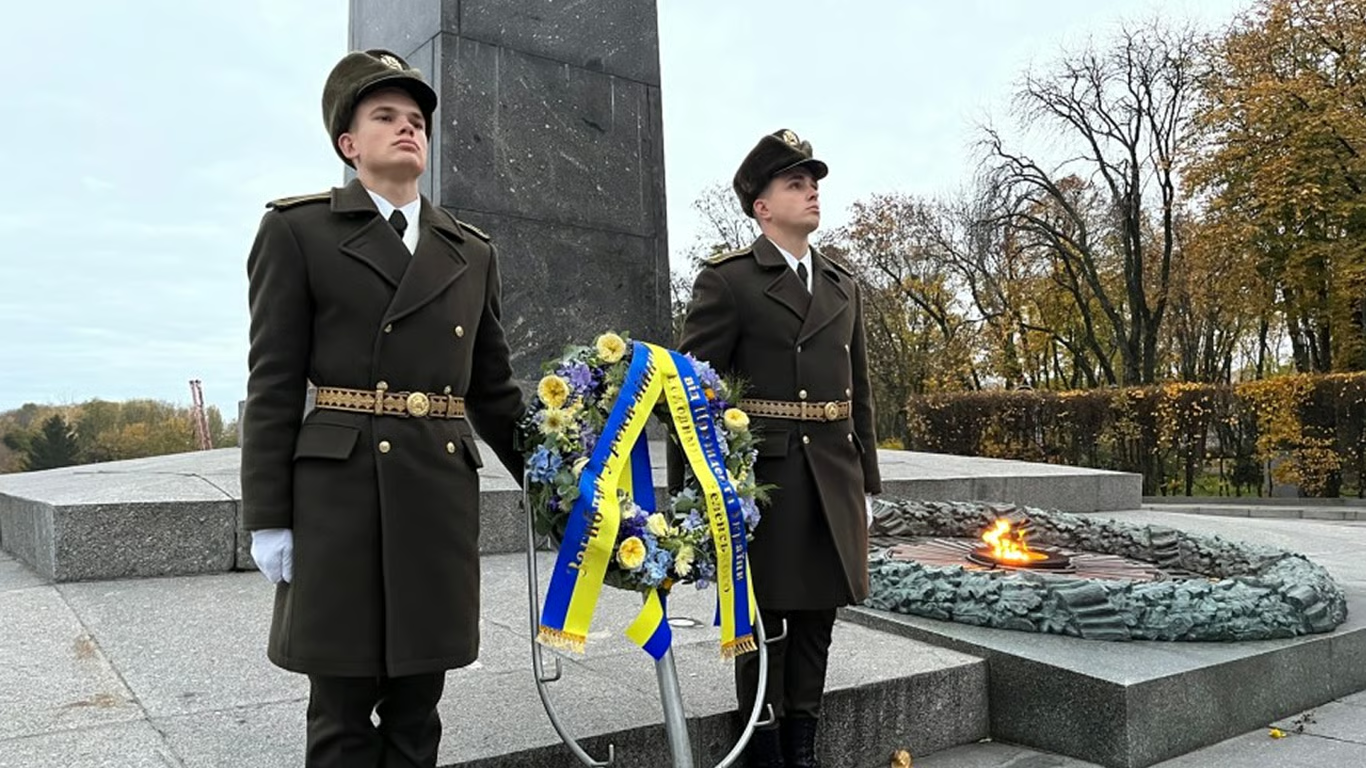
On October 28, Ukraine commemorates the expulsion of Nazi forces from its territory during World War II. This commemorative date was established in 2009 to honor the heroism and sacrifice of the Ukrainian people in their struggle against Nazi occupation.
This is reported in an article from Novyny.LIVE.
When was the commemorative date established?
The Day of Ukraine’s Liberation from Fascist Invaders was established by Decree No. 836/2009 of Ukrainian President Viktor Yushchenko, dated October 20, 2009. The decree provided for an annual commemoration on October 28 to honor the heroic deeds of Ukrainians during World War II.
How the expulsion of Nazi troops took place
The expulsion of the Nazi occupiers from Ukrainian territory began in 1943. After the defeat of German forces at Stalingrad, the Red Army launched an offensive, and Ukrainian territory became one of the main theaters of war on the Eastern Front.
In February 1943, Soviet troops captured Kharkiv and a number of other cities, but in March they were forced to retreat due to a German counteroffensive. The final expulsion of Nazi forces from Ukraine took place in the fall of that year.
One of the key stages was the Battle of the Dnieper. In September–December 1943, Soviet troops crossed the river, captured bridgeheads on the right bank, and launched an offensive on Kyiv. On November 6, 1943, the capital of Ukraine was liberated from Nazi occupation.
In 1944, the Red Army carried out a series of large-scale offensive operations:
- The Korsun-Shevchenkivskyi Offensive — In January–February, Soviet troops surrounded a large German force in Right-Bank Ukraine.
- The Odessa Offensive —in March–April, Soviet forces regained control of Mykolaiv and Odessa.
- Crimean Offensive — In April–May, German and Romanian forces were driven out of the Crimean Peninsula.
- The Lviv-Sandomierz Offensive — In July and August, large-scale battles took place in western Ukraine, particularly in the Lviv and Rava-Ruska sectors.
- The Carpathian-Uzhhorod Offensive —in September–October, Soviet troops advanced in the Carpathians and Transcarpathia.
On October 28, 1944, Soviet troops reached the outskirts of Chop. However, fighting for the city and the surrounding areas continued for nearly another month.
Why Historians Question the Accuracy of the Date
Despite the official designation of this date as a commemorative one, historians point out that October 28, 1944, did not mark the definitive end of the Nazi occupation of the entire territory of modern-day Ukraine. Fighting in Transcarpathia continued until November, and German troops finally withdrew from the region on November 25–26.
Therefore, October 28 symbolizes the final stage of the expulsion of Nazi troops, but it does not coincide with the day all hostilities on Ukrainian soil ceased.
Who took part in the fight against the Nazis
The backbone of the offensive operations was the regular Soviet army, which included millions of Ukrainians. Soviet partisan units and the Ukrainian national underground, including the Ukrainian Insurgent Army, were also active on Ukrainian territory. Ukrainians also fought as part of the armies of the anti-Hitler coalition on various fronts of World War II.
Ukrainian territories became one of the hardest-hit regions in Europe due to the hostilities and the Nazi regime’s occupation policies.
October 28 is an opportunity to honor the memory of those who died and suffered during World War II, to recall the tragedy of the Nazi occupation, and to reflect on Ukraine’s complex history in the 20th century.