


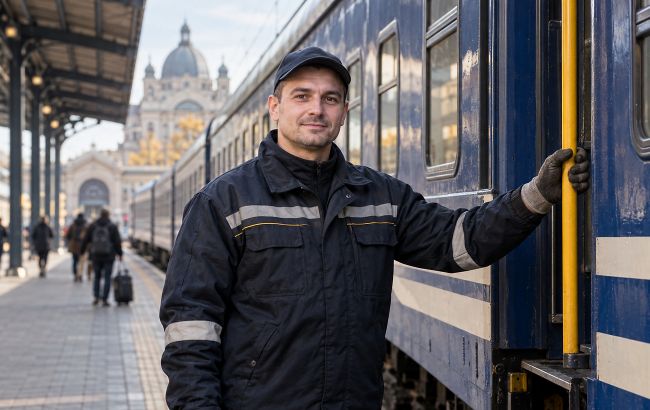
On 4 November Ukraine marks Railway Workers’ Day. The history of this professional holiday goes back to Lviv, where the first train from Vienna arrived more than 165 years ago. Since then the railway has become an important part of the country’s life, and its workers an inseparable part of the transport system. During the full-scale war their work has taken on special significance: railway workers evacuate people, carry humanitarian cargo, restore damaged infrastructure and keep trains running despite constant Russian attacks.
This is reported by Styler RBC-Ukraine.
Why Railway Workers’ Day is celebrated on 4 November
The date of the holiday is linked to a historical event on 4 November 1861. That day the first train from Vienna arrived in Lviv via Przemyśl. Named “Jarosław”, it linked several European cities: Vienna, Kraków, Przemyśl and Lviv.
At the time Lviv was ruled by the Austrian Empire. The train’s arrival was an important milestone in the development of rail links on the territory of present-day Ukraine. It was this date that was later chosen to honour the industry’s workers.
It is worth noting that the Przemyśl–Lviv line appeared earlier than the Odesa–Balta section, which Soviet historiography considered the beginning of Ukraine’s railways.
How the date of the holiday changed
In independent Ukraine, Railway Workers’ Day was originally celebrated on the first Sunday of August. But in 2002 the date was moved to 4 November to link the professional holiday with the history of the railway’s arrival in Lviv.
The change was enshrined in Decree of the President of Ukraine No. 1140/2002 of 11 December 2002. Since then, 4 November has been the day to honour train drivers, conductors, dispatchers, track workers, repair crews and all the other specialists in the railway sector.
Railway workers in wartime: work that saves lives
With the start of Russia’s full-scale invasion, the railway became one of the key routes for rescuing and supporting the country. Millions of Ukrainians, including residents of frontline and temporarily dangerous areas, were evacuated by train. Railway workers continue to carry passengers and humanitarian cargo, meet logistical needs and keep the regions connected.
According to Ukraine’s Ministry for Communities and Territories Development, the industry’s workers also restore railway infrastructure after Russian attacks and do everything they can to keep trains running even in difficult conditions.
Behind every route is the work of a great many people. Drivers drive the trains, conductors look after passengers, dispatchers coordinate traffic, and repair crews and track workers restore damaged sections. Many railway workers work under the threat of repeat strikes, often returning to their duties immediately after an attack.
Railway Workers’ Day is not only an occasion to recall the history of the industry, but also to thank the people who keep it running every day. Their endurance, professionalism and dedication help save lives, support the economy and preserve the country’s unity even in wartime.