


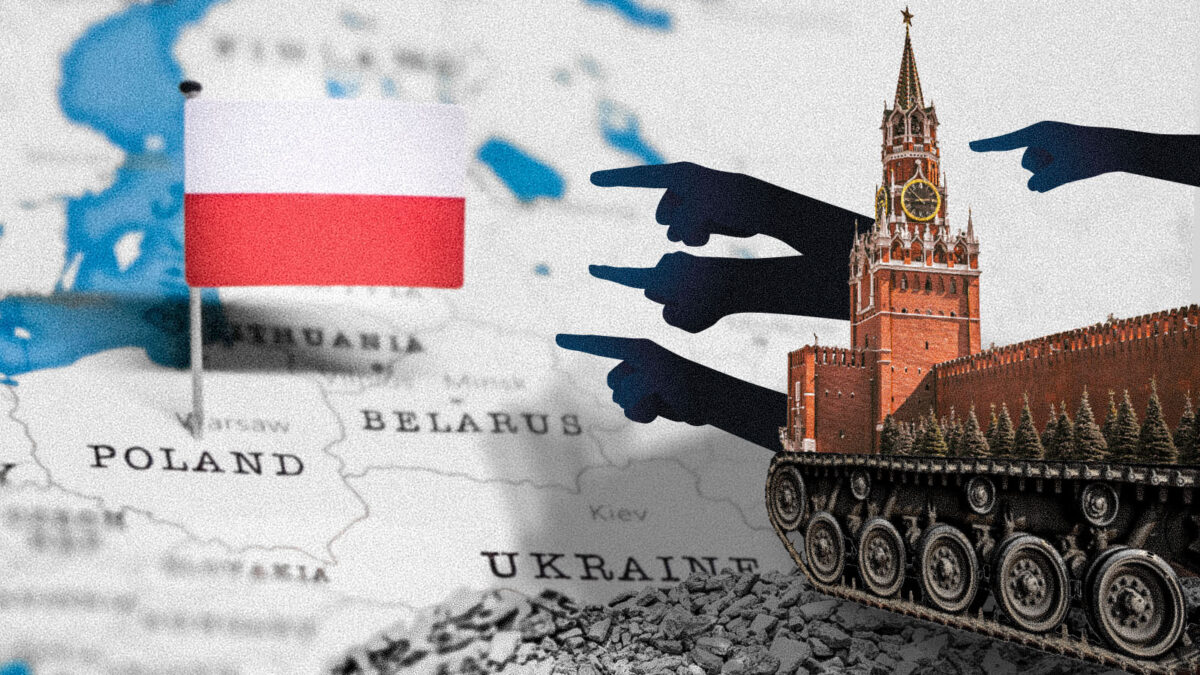
Russian propaganda is increasingly shifting its information attacks from Ukraine to European countries. Its aim is not limited to discrediting Kyiv: the Kremlin is trying to set Ukraine against its allies, sow distrust of European governments and convince its own population that Russia itself has supposedly become the victim of outside aggression. New fakes about Ukrainian MPs in Poland, a ban on protests in France and an invented Polish threat show how these information operations work on several fronts at once.
Fake Ukrainian deputies: how anti-Ukrainian sentiment is stoked in Poland
One strand of Russian disinformation is creating conflicts between Ukraine and Poland. To this end propagandists use doctored videos, invented quotes and fake profiles, trying to portray Ukrainian politicians as people who despise Polish society and are ready to blackmail a neighbouring state.
Videos circulated on social media with supposedly scandalous statements by Orest Machovskyi, a member of the Volyn Regional Council. He was credited with the words: “If Poland doesn’t give us money, our diaspora will sabotage work.” Another clip featured a Lviv city councillor who allegedly called Poland “our land”.
The problem is that these statements are invented. The material shows signs of forgery: the profile images do not match the real politicians, elements of AI generation are used, and the texts contain Russianisms. In other words, this is not genuine communication by a Ukrainian official but a deliberate attempt to manufacture a scandal that does not exist.
The Russian propagandists’ calculation is obvious. Polish audiences are meant to see Ukrainians as ungrateful and aggressive people who supposedly demand financial support, threaten sabotage and insult Polish institutions at the same time. For Russian propaganda this is a particularly useful storyline, because it strikes at relations between two neighbouring states and exploits sensitive topics that can provoke an emotional reaction.
Such fakes do not need to convince everyone. It is enough for them to take root in the information space, enter political debate and deepen distrust of Ukrainians. Even a rebuttal cannot always fully neutralise the first emotional impression.
Macron “banned protests”: how partial restrictions are spun into dictatorship
This example of Russian lies is aimed less at Ukraine than at discrediting European democratic institutions. Reports spread online that French President Emmanuel Macron had announced a complete ban on demonstrations in the country. The story was woven into a broader narrative of mass protests in Europe, social discontent and the supposed inability of European governments to respond to citizens’ demands.
The real content of Macron’s statement, however, was different. The French president did speak about the possibility of banning certain demonstrations, but this concerned only unauthorised actions, not a complete end to the right to protest. Demonstrations organised by trade unions were not covered by the ban. Restrictions could apply to certain march routes if there was a threat to businesses or public buildings.
Nor was there any question of an indefinite ban on protests. What was discussed were recommendations for the coming days, in particular Saturday 24 October. In the propaganda retelling, however, all these nuances disappeared. Restrictions on certain unauthorised actions turned into a supposed total ban on protest activity in France.
This is a classic manipulation technique: take a politician’s real statement, rip it out of context, exaggerate the scale of the decision and present it as proof of authoritarianism. For the Kremlin such messages serve a dual purpose. On the one hand, they undermine Europeans’ trust in their own governments. On the other, they work on the Russian domestic audience, which is being told that Western democracy is supposedly no better than Russian authoritarianism. If France is “banning protests”, the argument goes, there is no reason to criticise Russia’s political system.
Poland supposedly attacked Russia: creating the image of an enemy
The third information attack concerns Europe’s security directly. After a Ukrainian FP-1 drone came down in Lithuania, reports began to spread of a supposed Polish attack on Russia and the possibility of a major war.
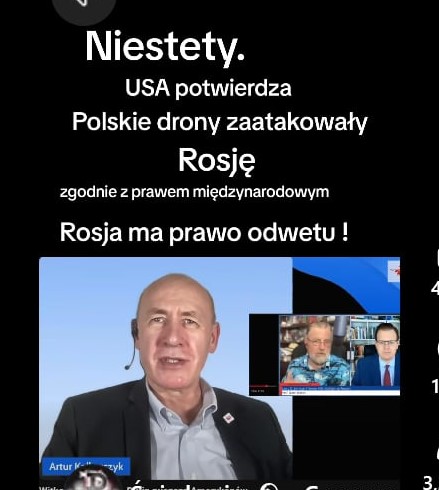
Pro-Russian bots and provocateurs in Poland began to whip up an artificial crisis
In reality the drone was Ukrainian-made, and Ukraine apologised for the incident. The reports contain no evidence that Poland attacked Russia or was preparing an attack. Claims that Russia was supposedly preparing a retaliatory strike on Polish territory rest on speculation and unverified statements by former CIA analyst Larry Johnson, who has repeatedly spread disinformation.
But what matters here is not only the specific fake but the overall logic of its spread. Russian propaganda is trying to create the impression that it is European states that threaten Russia, while Moscow is merely defending itself against a supposedly hostile encirclement. In this construction Poland appears not as a country that supports Ukraine and strengthens its own defence, but as a potential aggressor supposedly preparing an attack.
This narrative is especially dangerous in the light of historical experience. Before acts of aggression against neighbouring states, Soviet and later Russian propaganda repeatedly used the image of an external enemy and the need for “self-defence” as justification. Moscow spread the same message before attacking Finland and other victim countries. And in 2026 the same thing is starting to be pushed about Poland. This is a dangerous signal. Such reports help prepare Russian society in advance to perceive future Russian aggression against Europe as a supposedly forced response.
If Russia ever launches military action against Poland or the Baltic states, part of Russian society will already have a ready-made information frame to explain what is happening. An attack could be presented as “retaliation”, a “pre-emptive strike” or defence against an invented threat. That is why the systematic spread of such reports should not be seen as a random collection of propaganda fantasies.
Europe as the main target of Russian disinformation
A common strategy can be seen in these three cases. Russia is simultaneously trying to set Ukraine against Poland, discredit France’s democratic institutions and portray Poland as a state that supposedly threatens Russia itself. The geography differs, but the goal is the same: weaken trust, stoke conflicts and make European societies less resilient to Russian pressure.
These fakes target different countries but are part of a broader campaign against European security. Today propagandists are convincing Poles that Ukrainians threaten them, the French that they are being stripped of their democratic rights, and Russians that neighbouring states are preparing an attack. Tomorrow these same narratives could become a justification for far more dangerous actions.
The greatest danger is that the information groundwork for war can be laid long before the war itself. Once a society has been taught to fear its neighbour, hate its ally and believe in an invented threat, all that remains is to find a pretext for the first shot. And then propaganda will perform its most important function: explaining to people why an aggression that was hard to imagine only yesterday has supposedly become necessary today.