


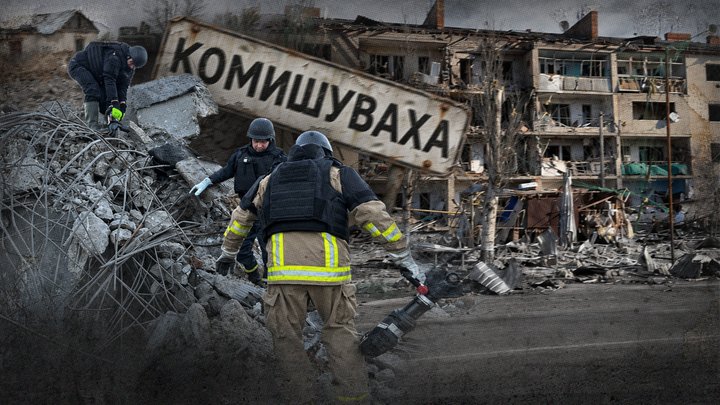
A forged cover of a respected American magazine, an invented interview with a South Korean defence company, and an attempt to pass off civilian humanitarian infrastructure as a military target. Russian propaganda continues to follow a cynical pattern: fabricate evidence, discredit Ukraine in the eyes of international audiences and justify the crimes of its own army. Behind these information attacks lies not just a desire to spread another falsehood, but to change how the war is perceived, sow distrust of Ukraine and make the world doubt even obvious facts.
A fake Time cover: how Russia appropriates the voice of global media
One common tool of Russian propaganda is producing fake material in the name of respected international media. This tactic not only spreads false information but also lends it the appearance of international recognition. If a fake is styled as a publication by a well-known outlet, part of the audience may take it as a confirmed journalistic fact.
Following exactly this pattern, Russian propagandists circulated a forged cover of the American magazine Time featuring a young man photographed during the events in Sofiivska Borshchahivka. The fake cover carried English headlines typical of Russian propaganda about supposed “terror against its own citizens”, “torture chambers” and an “uprising against the regime”. Time published no such cover, and the arrangement of the text clearly reproduces familiar Russian propaganda clichés.
Such forgeries are aimed not only at people who regularly consume Russian narratives. A fake cover can turn up in social media feeds without explanation, be reposted in themed groups or be used as supposed proof that the West is turning away from Ukraine. A person who does not check the original source gets a ready-made emotional picture and may not even suspect it is a fake.
An invented interview: how the Russians are inflating a scandal between Ukraine and South Korea
Another Russian information operation targets Ukrainian-South Korean relations. This time the propagandists used a fabricated interview with a representative of a defence company: the South Korean start-up Newtype Industries, which develops software for artillery.
Reports began to circulate online that the company had decided to wind down or pause its projects in Ukraine because of worsening relations between Kyiv and Seoul. The material, attributed to The Diplomat, claimed that Ukrainian military units had supposedly been told to stop testing Newtype Industries’ artillery software, citing diplomatic tensions between the two countries.
The company itself, however, denied that any such interview existed. In a statement on LinkedIn, Newtype Industries said that The Diplomat had not contacted its staff or conducted any interview. The quotes attributed to the company’s management were fabricated. The company stressed that it takes the publication of false claims and invented statements extremely seriously.
Newtype Industries also declined to discuss confidential operational and commercial matters, but noted separately that the claims made in the fake material do not properly reflect its activities or the circumstances of its work.
This story hits several sensitive areas at once. First, it creates the impression that Ukraine is losing partners in defence technology. Second, it tries to present Kyiv’s cooperation with Seoul as hostage to political disagreements. Third, it undermines confidence in Ukraine’s ability to attract international companies to develop its own defence sector.
In this way propaganda tries to turn an invented statement by a private company into supposed evidence of a wider diplomatic crisis. This is especially dangerous at a time when Ukraine is keen to expand international partnerships, attract foreign technology and create joint defence projects.
Komyshuvakha: first a Russian strike, then lies
The most cynical part of Russia’s propaganda tactics shows up after strikes on civilian targets. When the consequences of an attack become obvious and information about the dead and injured spreads through Ukrainian and international media, the Russian side starts looking for justifications. To that end, civilian sites are presented as military headquarters, troop locations or other supposedly “legitimate” targets.
This scenario unfolded after the Russian air strike on the settlement of Komyshuvakha in the Zaporizhzhia region on 2 November. The Russian occupiers used at least nine guided aerial bombs. Among the sites hit was an underground school where a humanitarian hub was operating at the time and aid was being handed out. According to the figures in the source material, by 6 November the death toll from the attack had reached 53.
Particularly tragic is that the victims included civilians who had come to receive humanitarian aid and people who rushed to help the injured after the first strike. The scale of the tragedy drew an international response. Latvian Foreign Minister Baiba Braže, for example, announced that an emergency meeting of the UN Security Council would be convened after the Russian attack.
In response to reports of the strike’s consequences, Russian propaganda outlets began spreading a version that a military headquarters had been located in the school building. Such claims appeared, in particular, on Telegram. This is a familiar technique: instead of explaining why the Russian army attacked a place where civilians were receiving humanitarian aid, propaganda tries to change the very nature of the site in the audience’s eyes.
However, there is plenty of video footage confirming that this was a school with a humanitarian hub, not a military headquarters. The footage contradicts the Russian version and makes it possible to verify the real circumstances of the tragedy. Importantly, in such cases Russian propaganda does not stop at denying the strike. It tries to shift responsibility onto the victims and convince the audience that the civilian site was supposedly a “legitimate” military target, and therefore that the tragedy was “justified”.
Many fakes, one strategy
Russian propaganda has long gone beyond simply spreading false reports. It imitates journalism, uses the names of respected media, invents quotes from real people and tries to create an alternative picture of the war. It relies on the speed at which information spreads and on the audience’s emotional reaction. A rebuttal usually takes more time than creating and amplifying a fake.
The most dangerous consequence of such operations may be not belief in each individual invention but the gradual erosion of trust in any information at all. When people constantly encounter mutually exclusive versions of events, they risk concluding that there is no truth at all and that all sides manipulate equally. That is exactly the effect propaganda seeks: it does not need to convince everyone of the Russian version; it is enough to make them doubt the Ukrainian one.
That is why, in today’s world, where fake covers and invented interviews can look more convincing than real documents, checking original sources is not just a media literacy skill but an element of national security.