


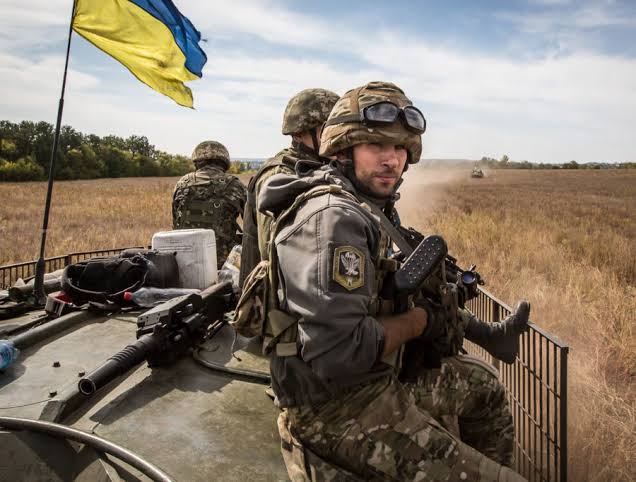
When it cannot defeat Ukrainian soldiers with weapons, the Kremlin turns lies, fake videos and invented accusations against them. Ukraine’s defenders are portrayed as torturers, criminals and enemies of their own people, and are blamed for things that are in fact part of Russia’s own methods of warfare. These are not isolated fakes but a deliberate campaign to discredit the Armed Forces of Ukraine. And the more effectively the Ukrainian army resists at the front, the harder Russia tries to destroy its reputation at home and abroad.
“A soldier in a pit”: how a video fake works
One example of this campaign is a video supposedly showing a serviceman of the 116th Brigade of the Armed Forces of Ukraine who, according to the authors of the posts, had been put in a pit by his commanders. At first the story was that he had been punished for refusing to follow orders. Later, new “details” began to appear on social media: supposedly the soldier was being held in the pit because he would not hand over his bank card PIN.
Stories like this are designed to provoke an emotional reaction. They touch on issues that are sensitive for society: how servicemen are treated, abuse by commanders, coercion and the financial exploitation of people in the army. For propagandists, it matters not just to spread false information but to create the impression that such cases are systematic practice in the Ukrainian army.
However, an examination of the video itself revealed signs of digital manipulation. The DeepFake-O-Meter tool detected a mismatch between the person’s lip movements and the audio track. This indicates that the audio was added separately and the lip movements were altered. This is not a genuine recording of an event but a deepfake made to imitate real testimony.
The mechanism of manipulation itself deserves attention. First, the audience is offered an emotional story that the video supposedly confirms. Then new details are added that make the accusation even more outrageous. As a result, people end up discussing not whether the recording is authentic but the invented circumstances of the event. That is exactly what the authors of the fake are after.
An Iranian TV channel and an invented threat to Europe
Another example shows how propagandists use the authority of real media to spread false reports. A video appeared on social media that was passed off as a report by Iran’s state TV channel IRINN. In it, there were supposedly threats to strike European cities, including Ukrainian ones, if the United States attacked Iran.
However, a check showed that the channel had broadcast no such report. The SynthID tool in Google Gemini detected signs that the image had been edited. A further check using the Wayback Machine archive compared the fake video with the original IRINN broadcast of 3 November 2026.
It turned out that the authors of the fake had taken real footage from the channel, overlaid its on-screen graphics, changed the map and added different content. In the original broadcast, the presenter was actually talking about the interception and destruction of American drones near the Strait of Hormuz. There were no threats to bomb European cities in that report.
This case is particularly revealing because the propagandists did not create the video from scratch. They took genuine television material and used it as the basis for a fabrication. This approach makes it much harder for an ordinary user to recognise a fake: a familiar logo, a real studio and a professional picture create an illusion of authenticity. But genuine TV graphics do not mean that the channel actually reported what is attributed to it.
Azov and an invented execution of a woman
Another fake circulating on social media is built around a particularly brutal scene. The video supposedly shows soldiers of the Azov battalion shooting a young woman whose hands are tied behind her back and then burying her in a mass grave alongside other dead soldiers.
Accusing Ukrainian defenders of executing civilians and of mass burials is one of the most toxic tools of Russian propaganda. Such reports are meant to provoke not just outrage but moral revulsion towards the Ukrainian army. The calculation is that shocking footage will be shared without verification and that its very appearance online will be taken as proof of a crime.
Here too, however, there are serious grounds to speak of a staged video. In particular, the woman in the clip has already appeared in another similar staged video. VoxUkraine previously debunked a video in which soldiers and representatives of a territorial recruitment centre supposedly lowered a woman with her hands tied into a well. The same person reappearing in another fake story is an important clue for exposing the manipulation.
The staging is also evident in how the scene is presented: the participants’ unnatural behaviour and poor acting do not create a convincing impression of a real event. But the main argument here is not a subjective impression of the video. It is the fact that the woman in it has already appeared in another debunked staged clip.
Why Russia attacks the reputation of the Ukrainian army
Russian propaganda is trying to create a parallel reality in which Ukrainian soldiers torture their own comrades, threaten the civilian populations of other countries and commit war crimes. What sets these information attacks apart is that they often exploit real social problems and fears. Ukrainians may be critical of particular decisions by commanders, have questions about the work of territorial recruitment centres, or know about conflicts in the army or problems with mobilisation. Propaganda uses these topics as the basis for invented stories, trying to replace discussion of real problems with emotional fabrications.
Russia also often tries to attribute to Ukraine the very crimes and methods it uses in the war itself. This is part of a wider strategy of information mirroring: the aggressor seeks to portray the victim of aggression as an equally criminal party, and to justify its own actions or push them off the international agenda.
The target is not only Ukrainian audiences. Such videos can be spread in English and other languages, reach foreign users and shape a false image of the Ukrainian army. What makes this especially dangerous is that a short emotional clip often spreads much faster than its debunking.
Don’t trust your first impression
Countering such fakes starts with a simple rule: a video is not evidence just because it looks convincing. You need to check the original source, look for the original publications, compare footage with archive recordings and watch for mismatches between sound and picture. Tools such as DeepFake-O-Meter, SynthID and web archives can help, but no single service should be the sole basis for a conclusion.
It is just as important not to become an unpaid distributor of propaganda. Even an indignant post captioned “look what they’re doing” increases the reach of a fake. If information has not been confirmed, it should not be shared, even with a critical comment.
Russian propaganda wants Ukrainians to stop trusting their own army and foreigners to start doubting whom they are actually supporting. And the more technologically advanced the fakes become, the more important it is for society to be able to tell real facts from a carefully edited performance. Next time, a fake video may be far more convincing, and its authors may be counting not just on views but on very concrete political and security consequences.